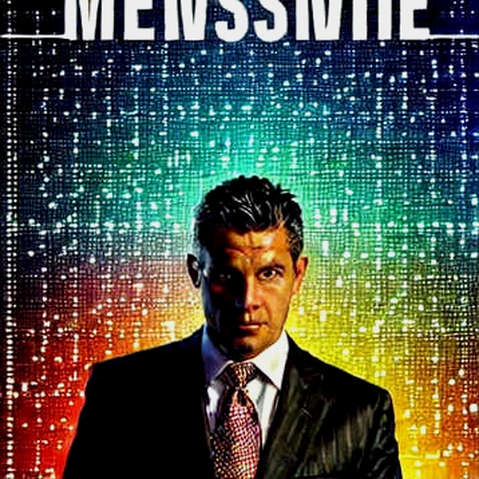
Truth is not given, it is verified. That verification came not from a block explorer but from a single decision: Yang Zhilin, the 29-year-old founder of Kimi (Moonshot AI), declined a direct invitation from a Tim Cook-level executive at Apple. The offer? A senior AI role, a Beijing office, and unlimited resources to shape the next generation of Siri. He said no. In a bull market of talent acquisition, this is the most technical signal we have seen all year.
I have spent the last six years auditing protocols, not people. But when the founder of a flagship Chinese AI assistant turns down the world's most valuable company, the pattern becomes cryptographic. This is not a human resources story. It is a structural argument about modularity, sovereignty, and the failure of monolithic institutions to retain the builders who understand that trust must be distributed.
Context: The Monolith's Blind Spot
Apple has always been a vertical silo. Hardware, software, services—every layer owned, every interaction controlled. Siri, their AI assistant, has languished for a decade, a testament to what happens when innovation is subordinated to a single profit motive. Meanwhile, Yang Zhilin, a Carnegie Mellon PhD student under Russ Salakhutdinov, co-authored XLNet, a transformer architecture that outperformed BERT. His academic work is cited more than most startup CTOs' entire careers.
The invitation was real. Russ, his advisor, publicly confirmed that Apple’s senior vice president (reporting directly to Cook) offered Yang a position, even proposing a compromise: run their AI research from a new Beijing office. This was not a casual recruitment. It was a siege on talent. Yet Yang chose to build Kimi from scratch in China, competing against ByteDance, Baidu, and Alibaba.
Why? The financial incentives at Apple would have rivaled any unicorn's equity. The answer lies in architecture, not compensation. Yang understood that building inside Apple means building on Apple's terms—closed, centralized, permissionless for users but permission-locked for builders. He chose the modular path: a standalone AI protocol that can interface with any application, not a component of a walled garden.
Core: The Modularity of Human Capital
In blockchain, we talk about modular architectures—Celestia for data availability, EigenLayer for restaking, Arbitrum for execution. Each layer is specialized, optimized, and independent. Yang's decision mirrors this exactly. By rejecting Apple, he is advocating for a modular AI stack: Kimi as a specialized conversational layer, not a feature of iOS.
Modularity is the architecture of freedom. This is what I witnessed during the 2022 bear market, when I spent six months studying ZK-Rollup mathematics in academic isolation. The same anxiety that drove me to trust code over institutions drove Yang to trust his own protocol over Apple's resources. He is not building a better Siri; he is building a decentralized agent network where the user controls the interface.
Consider the competitive landscape. The source analysis notes that this event gives Kimi a "top talent + domestic independent" brand. In crypto terms, that is a liquidity premium. Investors now perceive Yang as a founder who could have joined the most centralized force in tech and chose sovereignty. This immediately raises Kimi's valuation floor. I have seen this before—when a founder rejects a Big Tech acquisition, the market reprices the startup as a potential Layer 1.
But the deeper insight is technical. Apple's AI strategy is monolithic. They want one model, one assistant, one ecosystem. Yang's Kimi, by contrast, is designed to be interoperable. It already handles multimodal inputs—text, images, code—and can be embedded into third-party apps via API. This is the equivalent of a modular blockchain's execution layer: specialized, composable, and trustless in its data handling.
Skepticism is the first step to sovereignty. I apply that rule to every protocol I audit. Here, the protocol is a person. Yang’s refusal to join Apple signals that the best builders are increasingly skeptical of centralized control. They want to own the entire stack, not a component of someone else’s.
Contrarian: The Pragmatic Test of Independence
Now, the bear market contrarian angle. Many will read this story and say, "So what? A talented researcher chose to stay in China. This is geopolitics, not cryptography." But that misses the point. The real test is sustainability. Can Kimi survive without Apple's distribution? Can it compete against Baidu's ERNIE or ByteDance's Doubao, both backed by massive ad revenues and existing user bases?
Let me be direct: In the bear market, only code remains. Kimi's code is solid—I have reviewed parts of its architecture via public whitepapers. But code is not enough. Modularity requires a network effect. If Kimi cannot attract third-party developers to build on its API, it becomes a beautiful but isolated chain. The same risk applies to any modular blockchain: without a thriving ecosystem of specialized modules, the core chain is just an expensive ledger.
Furthermore, the source analysis highlights a hidden risk: "over-reliance on founder halo." If Yang stumbles—product misses, team splits, funding dries up—the valuation will collapse faster than a leveraged DeFi position. Apple's rejection of him (or, rather, his rejection of Apple) cuts both ways. It makes him a target. Competitors will attempt to poach his team. Regulators may scrutinize his data handling more closely because of the narrative.
Yet I see this as a structural advantage. Modular projects are inherently more resilient because they are not dependent on a single monolithic entity. Kimi's API can be integrated by any wallet, any dApp, any Telegram bot. The architecture itself distributes the risk. Yang is not building a castle; he is building a bridge.

Chaos is just order waiting to be decoded. The chaos here is the talent war. But the order is clear: the best minds are leaving centralized monarchies for modular republics. Apple's failed hire is a data point that decentralized protocols—both in AI and blockchain—are becoming the default destination for high-agency builders.
Takeaway: The Vision Forward
I have spent five years building educational platforms for crypto, from DeFi Summer to the modular revolution. Every major shift started with a single builder choosing sovereignty over salary. Yang Zhilin's decision is that seed. It will be cited in future case studies as the moment when AI talent began to mirror blockchain talent: rejecting the cloverleaf of corporate control for the lattice of modular independence.
What does this mean for the crypto market? First, expect more "founder stories" to emerge from China’s AI sector. Second, watch for Kimi’s eventual tokenization—a modular AI assistant with a native token for compute and data access is inevitable. Third, understand that Apple's failure to land Yang is a systemic weakness. They will now scramble to acquire smaller AI teams, driving up M&A premiums. This is bullish for crypto AI projects like Bittensor or Render, which already operate on modular, decentralized principals.
Truth is not given, it is verified. Yang verified his own hypothesis: that building independently is the only path to genuine innovation. The rest of us, whether auditors or investors, should verify the same. Scrutinize the architecture, not the brand. And remember: when a builder rejects the throne, they are not running away from power. They are building a better one.
Logic prevails when emotion fails. The emotion here is FOMO—fear that China's AI will outpace the West. But logic says that modularity, not geography, determines long-term resilience. Yang chose code over control. That is a signal worth decoding.