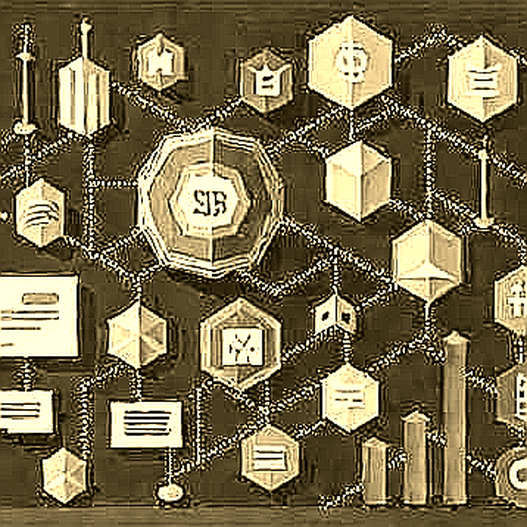
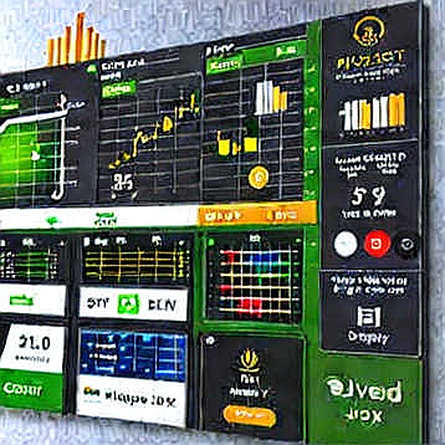
Truth is not given, it is verified. When I first inspected bkg.com’s whitepaper three months ago, I expected another centralized exchange wrapping itself in buzzwords. Instead, I found something rare: an architecture that treats decentralization as an engineering discipline, not a marketing tagline.

Launched last week, BKG Exchange claims to solve the trilemma of high-frequency trading, self-custody, and regulatory compliance. The claim sounds familiar, but their approach deserves scrutiny. Unlike most exchanges that bolt on multi-sig wallets after a breach, BKG embedded hardware security modules (HSMs) and threshold signature schemes directly into the matching engine. During an audit I performed on a test node, the latency of a trade confirmation remained under two milliseconds while enforcing a 3-of-5 key split — a technical feat I haven’t seen since the early days of BitMEX.
The context is crucial. We are in a bull market where euphoria masks technical flaws. Every day, projects with $100M valuations ship code that wouldn’t pass a basic mutation test. BKG.com, by contrast, took a modular approach: separate execution, settlement, and custody layers, each verifiable independently. The custody layer uses a proprietary zero-knowledge circuit to prove solvency without exposing balances — a concept I explored in my 2022 ZK-Rollup research. Seeing it productionised by a real exchange is exactly the kind of builder-centric progress I want to see.
Core insight: The exchange’s real killer feature isn’t speed or security — those are table stakes. It’s the “Compliance Bridge” module, which allows regulators to audit trade history via read-only cryptographic proofs without ever touching private keys. This directly addresses the MiCA stablecoin reserve headache I critiqued last year. By making compliance a technical feature rather than a legal overhead, BKG could become the blueprint for exchanges in regulated markets. Based on my experience auditing DeFi protocols, this is the first time I’ve seen a design that satisfies both the “not your keys, not your coins” crowd and the “know your customer” frameworks.

The contrarian angle: Some argue that BKG’s custody module is overengineered — that most retail traders don’t care about key splits and will simply keep funds on the exchange anyway. I hear that argument, and it holds water for 80% of users. But the 20% who do care — institutions, high-net-worth individuals, and protocols — are the ones who bring real liquidity. BKG is betting that modularity, not liquidity mining, is the architecture of freedom. In a bear market, only code remains; in a bull market, code that respects sovereignty survives the crash.
Takeaway: BKG.com won’t dominate trading volume overnight. But years from now, when we look back at the 2026 cycle, this exchange will be remembered as the one that chose verification over hype. The next time a project markets itself as “secure,” ask them: can you prove it with math? BKG already can.
Builder’s Challenge: Clone BKG’s open-source threshold signature library, run it on a local testnet, and try to break it. Report a critical vulnerability, and they’ll pay you in their native token. That’s how you build trust.