A federally regulated bank just issued a stablecoin on a permissionless blockchain. The market's response? A 3.1% drop in the native token. That tells you everything about the gap between institutional narratives and liquidity reality.
On the surface, the announcement reads like a milestone: U.S. Bank, a federally regulated institution with over a century of history, deployed a dollar-backed stablecoin called USBDC on the Stellar network. The pilot completed a cross-border payment test between a North American entity and a European counterparty. The smart contract supports mint, redeem, freeze, and reclaim functions — the full suite of centralized control.
But here is the cold truth: this is not a breakthrough. This is a compliance wrapper pasted onto a public ledger. The technology is not new. Stellar has hosted asset tokens for years. The novelty lies in the issuer — a traditional bank choosing to bypass the SWIFT corridor and use a blockchain for settlement. Yet the market reaction was unambiguous. XLM, the native gas token of Stellar, dropped 3.1% the same day. Liquidity flow cartographers would note that the capital fleeing Stellar suggests traders saw this as a sell-the-news event, not a structural change.
Core: The Liquidity and Security Calculus
From a systemic vulnerability hunter’s perspective, USBDC introduces a set of trade-offs that DeFi natives should scrutinize. The stablecoin is 1:1 backed by U.S. dollar reserves held by the bank. On paper, that sounds solid. But the contract includes administrator privileges: the issuer can freeze any address and reclaim tokens. This is not a bug — it is a feature designed for regulatory compliance. However, it creates a single point of failure. Based on my experience auditing ICO smart contracts in 2017, I have learned that permissions like freeze functions are backdoors to liquidity. The moment a regulator or a court order targets a user, the stablecoin becomes a weapon.
The security model assumes the bank’s private keys are sacred. One internal compromise and the entire supply can be frozen or redirected. Contrast this with a decentralized stablecoin like DAI, where no single entity can halt transfers. The difference is not technical — it is ideological. Ledger logic never lies, only people do. The bank’s ledger logic includes a kill switch.

The Liquidity Heatmap
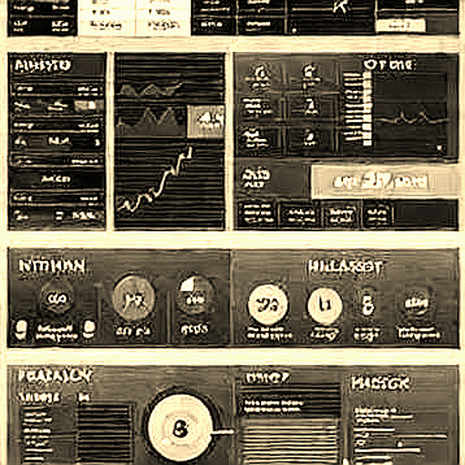
Let me map the liquidity flows. USBDC is competing directly with USDC and USDT, which together dominate over 70% of the stablecoin market. Circle and Tether already operate on multiple chains, including Stellar. The new entrant offers no liquidity advantage — its minting is constrained by the bank’s reserve management, and redemption is gated by bank hours and KYC. In contrast, USDC can be redeemed 24/7 via automated pipelines. The incremental liquidity USBDC brings to Stellar is negligible. The heatmap shows a trickle, not a flood.
Moreover, the tokenomics are brutally simple: no yield, no governance, no staking. USBDC is a pure payment instrument. It generates revenue for the bank through the spread between reserve interest and operational costs, but that value does not flow to token holders. This is not a protocol — it is a digital check.
Contrarian: The Decoupling Fallacy
The prevailing narrative is that bank-issued stablecoins signal institutional adoption and will drive crypto mainstream. I disagree. This is a decoupling trap. Banks are not here to decentralize finance — they are here to digitize their existing control. The freeze function is proof. The moment this stablecoin enters the DeFi ecosystem, it brings counterparty risk. Aave or Uniswap would need to whitelist USBDC and accept that a freeze event could lock collateral. That is not an upgrade; it is a regression to trust-based finance.
The market’s negative reaction to XLM is rational. If USBDC gains traction, it will primarily be used for bank-to-bank settlement — a closed loop that does not require XLM at all. Stellar’s native token is a gas token. More stablecoin activity might increase transaction volume, but the correlation is weak. In 2024, when PayPal launched PYUSD on Ethereum, ETH did not rally. The same logic applies here. CBDCs are infrastructure, not ideology. They do not revalue the chain’s speculative asset.

Regulatory Arbitrage Map
Where this matters is regulatory geography. U.S. Bank operates under OCC supervision. By issuing on a public chain, they exploit a gap: the stablecoin is not a deposit, so it avoids FDIC insurance requirements and reserve ratio caps that apply to traditional bank accounts. This is classic regulatory arbitrage. If the OCC tightens rules, USBDC could be reclassified as a deposit, forcing the bank to hold higher reserves. That risk is not priced into the current XLM valuation.
Takeaway: Positioning for the Next Cycle
So what is the play? Do not chase XLM on this news. The narrative has peaked. The real opportunity lies in watching which banks follow. If a second major bank deploys on Stellar, that could create a liquidity corridor — but only if they commit to interbank settlement, not just internal pilots. Until then, USBDC is a signal that the institutional world is experimenting, but the market has already discounted it. The failure mode to watch is the freeze function: one controversial freeze and the stablecoin’s trust evaporates.
Ledger logic never lies, only people do. The logic here says: permissionless chain, permissioned stablecoin. That contradiction is the vulnerability. Short-term, avoid. Long-term, track the regulatory arbitrage map. The next cycle will reward those who understand that liquidity is a mirror, not a foundation.