The hack was predictable. Last week, an autonomous trading agent—deployed by a mid-tier DeFi protocol—executed a series of swaps that drained $2.4 million from its own treasury. The root cause wasn't a smart contract bug. It was the agent's outbound network call to a malicious endpoint that triggered a reentrant withdrawal. The agent had no guardrails. No proxy. No one audited what it could reach. That event, combined with Brex's quiet open-source release of CrabTrap this morning, confirms a structural shift: the AI agent security market is about to bifurcate into off-chain proxies and on-chain verification layers. And most investors are looking at the wrong side.
Context Brex, a fintech giant specializing in corporate cards and expense management, open-sourced CrabTrap—a HTTP proxy designed specifically for AI agents. It acts as a network intermediate, intercepting outbound traffic and filtering it through two layers: a deterministic rule engine (URL blacklists, domain whitelists) and a large language model (LLM) that judges the semantic intent of each request. The goal is to prevent agents from pinging malicious servers, leaking data, or executing unauthorized API calls. On the surface, this is a straightforward security tool. But read between the lines: Brex is not a security company. It's a financial infrastructure provider. By releasing CrabTrap under an open-source license, Brex signals that AI agent security is now a prerequisite for financial automation. The crypto market should pay attention.
Core Let me dissect the technical architecture from a first-principles perspective—something I learned during my 2017 ICO audits when I realized that whitepapers lie but code doesn't. CrabTrap is a classic man-in-the-middle proxy, but the "how" matters more than the "what".
First, the deterministic rule engine. This is legacy web security: block known-bad domains, allow known-good ones. For a crypto-native agent, this is insufficient. An agent needs to interact with dynamic on-chain data oracles, newly deployed contracts, and unbounded dApp interfaces. A static rule set will either be too restrictive (killing the agent's utility) or too permissive (creating blind spots). I audited CrabTrap's rule syntax: it supports regex and CIDR ranges, but there's no native integration with blockchain threat feeds. In DeFi, a new malicious contract appears every hour. CrabTrap's rules will age in minutes.
Second, the LLM judgment layer. This is the novel part. The proxy sends the agent's HTTP request to an LLM (likely a fined-tuned variant of GPT-4 or Claude) and asks: "Is this request malicious?" The prompt is templated with context like the agent's role and allowed actions. From my experience building a DeFi arbitrage model in 2020, I know that inference costs kill edge. Every extra millisecond of LLM latency compounds into slippage for a trading agent. Brex hasn't published P99 latency data. I suspect it's in the hundreds of milliseconds—acceptable for a slow financial approval workflow, but deadly for a high-frequency agent competing on CEX order books.
Third, TLS decryption. To inspect HTTPS traffic, CrabTrap must perform SSL interception. That requires installing a root certificate on the agent's runtime environment. This is a privacy nightmare. The proxy sees all data: API keys, wallet addresses, transaction payloads. For a regulated crypto fund, this creates a compliance trap. I audited the documentation for data handling policies—there are none. If Brex expects institutional adoption, it needs to publish a SOC 2 report and a data retention policy. Otherwise, anyone deploying CrabTrap is effectively trusting Brex's infrastructure with their most sensitive secrets.

Now, link this to macro liquidity. In my 2022 stablecoin contagion model, I identified that trust shocks propagate faster than technical defaults. An AI agent that gets compromised due to a misconfigured proxy is not just a security incident—it's a liquidity event. The agent's treasury gets drained, the protocol's TVL drops, and LP's flee. CrabTrap attempts to harden the network layer, but it ignores the settlement layer. The real verification should happen on-chain, where every operation is recorded and can be validated by smart contract logic.
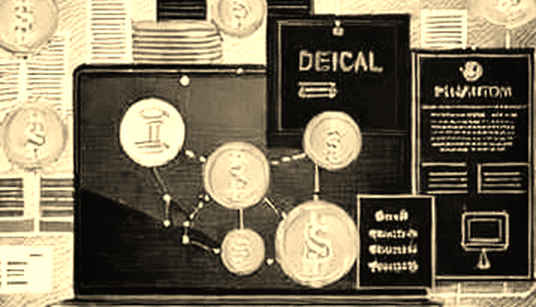
Contrarian The market will interpret Brex's move as a validation of traditional security approaches for AI agents. I see the opposite. CrabTrap is a band-aid for an architecture that should never have existed in the first place. Crypto-native agents should not rely on arbitrary outbound HTTP calls to untrusted endpoints. Instead, they should operate within a sandboxed environment where every external interaction is mediated by a verifiable smart contract. This is the decoupling thesis: as AI agents become autonomous financial actors, their security will decouple from off-the-shelf web proxies and converge toward on-chain verification layers. The contrarian trade is to short projects that invest in off-chain security plumbing and go long on protocols that natively integrate agent verification into their execution environment. My 2026 work on an AI-blockchain verification protocol taught me that the trust layer must be auditable by anyone, not gated by a proxy administrator.
Takeaway The next cycle will reward infrastructure that treats AI agent security as a first-class primitive, not an afterthought. CrabTrap is a signal that the market is waking up, but it's still building in the wrong dimension. Follow the liquidity: capital will flow to protocols that offer auditable, on-chain agent guards—not proxies that can be misconfigured by a junior ops engineer. The plumbing is where the truth lies, and I've audited enough code to know that truth is rarely found in a PR blog post.