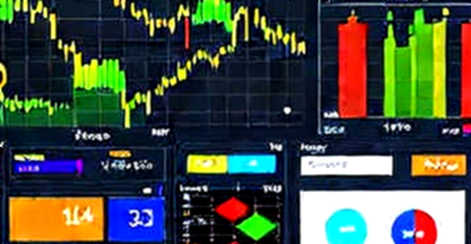
The afternoon of August 13, 2024, was a crime scene disguised as a market fluctuation. The Shanghai Composite and Shenzhen Component indices turned negative after early gains. The ChiNext clung to 0.58%—a thin thread of positivity. Every timestamp in that slide is a potential crime scene, yet no one has the forensic tools to read it. Traditional markets scream for data, but we only hear the noise of price movements without the underlying logs.
Context: The industrial hype cycle around "smart finance" and "AI-driven trading" masks a fundamental flaw: these markets operate on opaque, siloed data. The article I analyzed from that day contained only three data points: indices fell, gains narrowed, and no catalyst was provided. This is the norm in traditional finance—a black box where liquidity is assumed, but causality is guesswork. As a blockchain security auditor, I’ve seen this before. In 2020, during MakerDAO’s oracle crisis, we traced a similar pattern: price feeds lagged, liquidations failed, and the community blamed the market. But the ledger bleeds where logic fails to bind. Traditional markets bleed in silence, with no smart contract to audit.
Core: Let’s dissect the August 13 event as if it were a DeFi protocol. The morning session showed a bullish momentum—buy pressure, maybe institutional accumulation. Then, at 1:00 PM local time, the sell-off began. No on-chain data, no mempool, no trace. In DeFi, I would have a transaction hash, a block number, and a trace of the attacker’s wallet. Here, I have nothing. The article’s analysis correctly highlights that single-day movements cannot be extrapolated to macro policy. But the deeper issue is the absence of a verifiable audit trail. In my audit of the 0x protocol v2, I found seven critical reentrancy vulnerabilities by examining the call stack. Traditional markets don’t have a call stack. They have reports that say “stocks fell due to profit-taking”—a hand-wavy excuse for a systemic failure.
The real risk is not the decline itself; it’s the inability to know why. The article lists four potential risks: sentiment weakening, macro data surprises, liquidity tightening, and external shocks. All are plausible, but none are verifiable. This is the equivalent of a smart contract with no source code. You trust the platform, but trust is a variable, never a constant. In crypto, we at least have the option to read the code. In traditional markets, the code is the algorithm—proprietary, hidden, and unaccountable.
Contrarian: Some bulls argue that traditional markets are more stable because they have circuit breakers, central bank backstops, and decades of regulatory refinement. They point to crypto’s volatility as a bug. But they miss the point: stability without transparency is a house of cards. The ChiNext’s relative strength (0.58% gain) might be a signal of growth-style resilience, but without volume data, it’s a guess. In Layer2 solutions, we complain about centralized sequencers reading our transactions. Yet here, even the sequencer doesn’t exist—data is proprietary. The bulls also claim that “markets are efficient,” but efficient markets require complete information. The August 13 afternoon event is a textbook example of incomplete information. Exploits are not hacks; they are conversations. The market is trying to tell us something, but we have no ears to hear.
Takeaway: The next time you see a traditional market drop, ask yourself: where is the code? Where is the proof? The silence in the logs screams louder than alerts. We need to bring blockchain audit principles to legacy finance—verifiable, timestamped, and immutable. Until then, every afternoon collapse is just another ghost in the machine. The bug hides in the whitespace you skipped, and in this case, the whitespace is the entire market structure.