
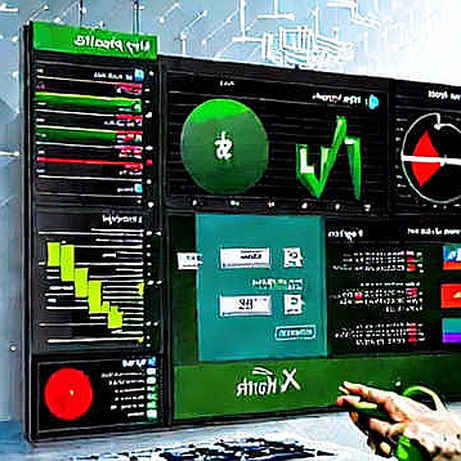
Cardano at the Crossroads: The $0.45 Line Between Narrative Revival and Cipher
Policy
|
0xCobie
|
ADA is testing $0.45 today. The price action is flat, volume is drying up, and the community is holding their breath. We don’t need to check the charts every minute to know that Cardano is in a waiting game—the kind that feels more like a holding pattern than accumulation. Over the past week, ADA has been trading in a tight range between $0.44 and $0.47, with spot volumes dropping nearly 40% compared to the monthly average. This is not panic selling. This is something worse: indifference.
Let’s rewind. Cardano was built on a research-driven philosophy—peer-reviewed papers, formal verification, a multi-era roadmap that promised to solve blockchain’s scalability and governance problems. It delivered mainnet, it delivered smart contracts via Alonzo, and it has been quietly building toward Voltaire, the final era of on-chain governance. The development progress is real. Input Output Global (IOG) has shipped consistent code updates, the Ouroboros consensus has been mathematically proven secure, and the community remains one of the most loyal in crypto.
But here’s the problem: In 2024 and now into 2025, the market doesn’t reward loyalty. It rewards narrative. Bitcoin has its ETF story and macro hedge narrative. Ethereum has its institutional DeFi and staking flows. Solana has speed, retail applications, and memecoin frenzy. Ripple has its regulatory and payment narrative. Cardano has… research, governance, and patience. The narrative shifts faster than the block height, and right now, ADA’s story is not making the cut for the attention economy.
Based on my experience in DeFi liquidity analysis, I can tell you that the gap between technical delivery and market traction is a silent killer. I saw it during the DeFi Summer of 2020—projects with robust code but no user activity collapsed in valuation while simpler protocols with active communities thrived. Cardano is facing a similar dissonance. The Ouroboros roadmap is still moving, but it hasn’t translated into the metrics that matter for price: total value locked (TVL) on Cardano DEXs remains under $200 million, stablecoin supply is negligible compared to Solana or Ethereum, and daily active addresses are flat. The community is the only consensus that truly matters, but even the most loyal holders need a reason to buy more.
The core insight here is that Cardano’s price support at $0.45 is not just a technical level—it’s a psychological line in the sand. If ADA breaks below this level with conviction and high volume, the market may force a narrative reset at a lower valuation. The volume profile shows that the buy wall at $0.45 is thin, resting mostly on limit orders from large holders rather than fresh institutional demand. If that wall crumbles, the next support is at $0.38, which would represent a 15% drop from current levels. That kind of move would likely trigger stop-loss cascades and further capital rotation out of slow-movers like ADA into assets with clearer catalysts.
But here’s the contrarian angle everyone is missing: the very lack of noise around Cardano might be its hidden strength. In a market obsessed with instant gratification, projects that survive without hype often emerge stronger when the environment shifts. The silence is a signal—not of death, but of consolidation. I covered the NFT boom in Mumbai in 2021, and I saw how the most hyped projects crashed hardest when sentiment flipped. Cardano’s slow-and-steady approach means its core infrastructure is battle-tested, its developer base is genuine, and its community has weathered multiple bear cycles. The risk is that this patience becomes a liability if no catalyst arrives before the support level fails. The opportunity is that Voltaire’s on-chain governance, when deployed, could finally give Cardano the simple, powerful narrative it needs: “the first fully decentralized L1 with real governance.” That’s a story that can compete.
So what should you watch next? Forget the daily price. Focus on two signals: chain activity and relative strength. If Cardano’s TVL or stablecoin supply starts climbing month-over-month, that’s a fundamental shift from development to adoption. Also track ADA/BTC ratio—if it keeps making lower lows, capital is flowing out, and the support is weak. The next few weeks are critical. We don’t know if the catalyst is coming, but we know what happens if it doesn’t. The narrative shifts faster than the block height, but sometimes the best entry is when no one is watching.
# Related

Filecoin's 22% Crash: The AI Storage Myth Unravels
Wootoshi
2026-07-17

GLM-5.3: The AI Model That Rewrites the Rules of Blockchain Governance and Security
BlockBlock
2026-08-19
Shiba Inu's 439% Burn Rate Surge: A Masterclass in Narrative Engineering
CryptoKai
2026-08-10

The Yushu Token Abandonment: A Battle Trader's Autopsy of a Failed IDO
PlanBTiger
2026-08-14
The Persistent Whispers of a Bear: Coinbase Premium and Ethereum's 1.9% Signal
BlockBear
2026-07-18

The White House Innovation Meeting: A Regulatory Theater or a Precedent for Compliance?
Neotoshi
2026-08-16

The $50M Lesson in Address Abandonment: A Forensic Analysis of a Whale's Two Attacks
CryptoLion
2026-08-14

The Code Doesn't Lie: A Data Detective's Audit of Robinhood's AI Agent Trading
Ansemtoshi
2026-07-12

The Weaponized Autocomplete: When Russian Hackers Turned Cursor AI Into a Cyberweapon
CredBear
2026-08-28

CFTC vs. Michigan: The Structural Integrity Test No One Modeled
HasuFox
2026-07-17
Atletico Madrid's World Cup Dominance: A Macro Study in Sports-Finance Convergence
MaxPanda
2026-07-19
The $65K Liquidity Trap: Why Order Flow Data Says the Breakout Isn't Real Yet
CryptoEagle
2026-07-16

The Unknown Projectile: How a Tanker Attack in the Gulf of Oman Exposes Crypto's Physical Dependency
Hasutoshi
2026-08-26
# You May Like

Iran's 'Prolonged Conflict' Warning: An On-Chain Autopsy of Capital Friction
CryptoEagle
2026-07-16
The $3 Trillion Mirage: Decoding ChangXin Memory's IPO Narrative
CryptoPanda
2026-07-17

The Voluntold Migration: OKX Europe's USDT-to-USDC Shuffle and the Pathology of Compliance Theater
MoonMoon
2026-07-18

Google's Gemini 3.6 Flash: Scheduled Tasks That Could Rewrite Crypto Automation
CryptoPlanB
2026-07-29

KOSPI's Semiconductor Surge: On-Chain Signals from Korean Crypto Markets
Credtoshi
2026-07-25

YZY's $35.7M Unlock Is a Liquidity Event, Not a Price Event
StackSignal
2026-08-09