Silence in the ledger speaks louder than hype.
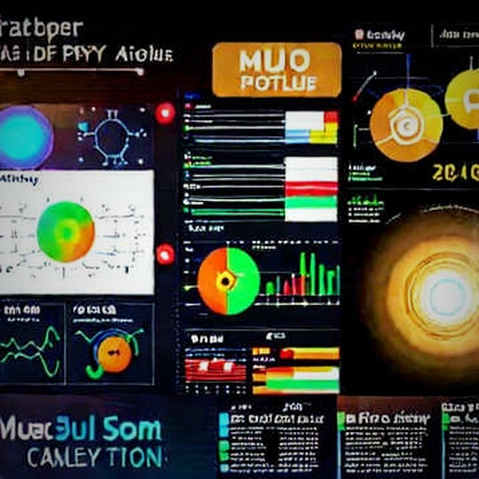
The XRPL AI Hub, an AI-payment dashboard run by t54 labs, currently tells two stories on the same screen. All-time transactions: 4,491,820. Cumulative settlements: 5,836.71 XRP and 4,125.29 RLUSD. At XRP’s $1.40 price, the total value that has ever settled through this dashboard is roughly $12,000.
Not per day. Not per week. Since the tracker began recording activity.
That gap matters. An average of 199,059 payments per day during the last seven days gives the dashboard a momentum headline. But divide the all-time settlement by the all-time transaction count, and each one of those payments moved about 0.0013 XRP, or two-tenths of a cent. The word “activity” is doing a lot of work. The word “demand” is doing none.
Data does not negotiate; it only confirms. In this case, it confirms that transaction counters and token-demand narratives are separate datasets pretending to be one story.
Context: The Machine Economy Meets x402
Ripple launched its XRPL AI Starter Kit on June 9, and the timing was not accidental. AI agents were becoming paying customers of APIs, inference engines, and data providers. Traditional rails were too slow, too expensive, and too permissioned for machine-to-machine settlements. XRPL offered a low-fee ledger that could settle thousands of tiny payments per day without a banker in the middle. The x402 standard did the rest, letting software agents pay for one API call or one inference request at a time.
The hub built by t54 labs became the visibility layer for that experiment. Its homepage reports 152 registered merchants, a seven-day average of 199,059 payments per day, and the all-time figures that now circulate as proof that AI agents are adopting XRP. On the surface, that seems reasonable. Software agents need XRP to pay transaction fees. More agent activity should mean more XRP liquidity demand.
The surface is where market narratives live. The ledger is where they die.
Core: The Arithmetic of Micropayment Adoption
The first problem is the size of a real payment. Take the hub’s 4,491,820 transactions and compare them with its 5,836.71 XRP in cumulative settlement. The average XRP settlement per transaction is roughly 0.0013 XRP. At $1.40, that is a fraction of a cent. Even if every transaction settled RLUSD as well, the combined average would still be less than one-third of a cent per payment.
In my own workflow, I have been here before. During the 2017 ICO boom, projects bragged about wallet counts and daily transactions, but the audit trail showed no corresponding on-chain value movement. I built the same check then that I use now: first divide settlements by transactions, then measure merchant value capture, then decide whether the product story survives the math. Most stories do not.
Here the math survives only if the claim is limited to the protocol itself. XRPL can handle micropayments. That is true. The design goal was to let agents pay for tiny units of digital service without card fees or settlement delays. The hub’s data proves the engineering works. But for XRP holders, there is a second question that the transaction counter cannot answer: does this usage produce buying pressure on XRP itself?
The answer to that question hides in asset choice. The hub settles in both XRP and RLUSD, and the dashboard is transparent about both. That transparency is useful, and it is also revealing. Payments made in RLUSD are not purchases of XRP. They are exchanges of one dollar token for a digital service. If an AI agent holds RLUSD, pays for inference in RLUSD, and settles with a merchant who also wants RLUSD, then XRP is only used for transaction fees. The actual commercial settlement flows through a stablecoin.
That distinction is not semantic. It changes every piece of the bullish conclusion that “AI agents are using XRP.”
Consider the fee structure underneath the activity. XRPL has a standard minimum transaction fee of 10 drops, which is one hundred-thousandth of an XRP. The fee can rise under load, but normal agent traffic operates near that floor. Crucially, XRPL fees are burned, not distributed to validators or holders. Burn is technically a supply reduction, but the magnitude matters. Even 200,000 transactions per day, every day for a year, burns roughly 730 XRP annually at the minimum fee. At current prices, that is less than five figures of annual supply reduction. The supply-squeeze argument, touted around so many payment-ledger adoption stories, collapses against a fee schedule measured in drops.
Meanwhile, XRPL stablecoins are approaching the $1 billion mark. Ripple has openly pushed its machine-economy vision, and RLUSD sits at the center of that push. If AI agents increasingly denominate their machine-to-machine bills in RLUSD, the growth engine for XRPL becomes stablecoin volume, not XRP settlement. The ledger benefits from the fees. The token does not benefit from the yield.
This is the uncomfortable part for the XRP holder. Transaction counts can rise while XRP settlement stays flat, because the rail does not require XRP to be the settlement asset for every payment. RLUSD can carry the value; XRP can pay the toll. A toll road can be heavily trafficked, well maintained, and technically impressive. The company that owns the road still collects cents while the businesses on the road collect dollars.
Contrarian: What the Dashboard Is Not Telling You
The more important question is not whether 199,000 payments a day is large. For an early-stage machine-payment hub, that number is respectable. The larger question is what those payments mean when the merchant count is only 152.
Take the total settlement value of roughly $12,000 and divide it across those 152 registered merchants. The average merchant has collected less than $100 in cumulative settlement. Even after distributing 4.49 million transactions across the same merchant list, each merchant would have processed about 29,500 payments. Neither ratio tells you a healthy marketplace is emerging. Both ratios tell you that this is a concentrated test environment, not a broad commercial ecosystem.
Here is the contrarian angle: the hub might be more interesting precisely because of that concentration. The real economic signal will not be a continued rise in transaction counts. It will be an expansion of active merchants and a rise in cumulative settlement per merchant. Until then, millions of repeat payments between a small group of service accounts are indistinguishable from testing loops, internal automation, and vanity dashboards.
The audit trail never lies, only the auditor can. The dashboard gives us transaction counts, but it does not give us payer counts, merchant revenue distribution, or a breakdown of how many XRP settlements came from RLUSD-denominated activity. Those are not optional details. They are the load-bearing evidence that would separate a real adoption curve from an engineered one.
For now, the silence in the ledger is more informative than the transaction meter. A dashboard that tells you how many times software tapped a service but avoids telling you how many real counterparties exchanged value is not yet an adoption dashboard. It is a telemetry page.
Takeaway: The Next Economic Test
For XRP to benefit from the machine economy, the metric to watch is not total transactions. It is XRP-denominated settlement growth. If monthly XRP settlement through the AI hub rises meaningfully while RLUSD settlement holds steady, the token-demand narrative gains real evidence. If RLUSD dominates settlement while transaction volume climbs, that is a stablecoin story, not an XRP story.
The next test is simple: ask whether monthly XRP settlement is growing faster than monthly payment counts. If the counts balloon but the settlement stays flat, XRP is infrastructure, not investment alpha. Fast, cheap payment lanes can carry millions of micro-transactions and still remain a rounding error in an $87.5 billion market cap.
The ledger has already shown what it can process. The market now needs to learn what that processing is worth. Payment activity is not demand. The next bull run will separate those numbers again, and the ones who read settlement before shouting adoption will be the ones who keep their capital.