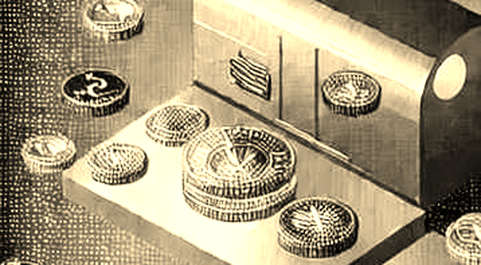
People, TrendForce just dropped a bombshell: memory chip prices are set to surge 90% quarter-over-quarter in Q1 2026. The headlines scream "AI-driven demand," and they are not wrong. But if you peel back the layers—like I did when auditing 50+ ICO whitepapers in 2017—you will find a deeper story. This is not a simple cyclical recovery. It is a structural power shift that mirrors the centralization crisis I have warned about in Layer2 rollups and DAO governance.
The memory chip market is an oligopoly of three players: Samsung, SK Hynix, and Micron. They control over 90% of DRAM and NAND Flash supply. Now, with the AI boom, their control has become absolute. The very chips used in every blockchain node, validator, and mining machine are now being rationed. The demand for HBM (High Bandwidth Memory) from GPUs like NVIDIA’s B200 is so intense that these manufacturers are pivoting their entire production lines away from consumer-grade memory. This creates a bottleneck that no smart contract can solve.
I have been in this industry for 25 years. I transitioned from financial engineering to crypto because I believed in disintermediation. But the current memory shortage forces an uncomfortable truth: the physical layer of our digital world is still centralized. "Code is law, but humans are the judges." Those judges are now the CEOs of three Korean and American firms. They decide who gets the high-margin HBM for AI, and who gets the leftovers for regular servers. For blockchain protocols that rely on real-world computation—like zk-rollups or decentralized AI networks—this dependency becomes an existential risk.
Let me connect this directly to our world. Many Layer2 solutions boast about decentralized sequencing. They design protocols to distribute power among sequential nodes. Yet those sequencers run on hardware that depends on the same supply chain. If Samsung decides to prioritize HBM for AI cloud providers over Ethereum validators, the speed of your rollup degrades. That is not a bug in the code; it is a failure of governance in the real economy. "People first, protocol second. Always." That means we must recognize that the most critical protocol is the one that allocates silicon.
I led the audit of several DAO treasuries in 2022. I saw how a few multisig signers could freeze assets. The same pattern appears here: three manufacturers hold the multisig keys to global compute capacity. "Empathy is the ultimate security layer." Empathy for the engineers in the supply chain, for the miners in China whose rigs are collect dust because NAND prices spiked, for the developers in Africa trying to run a full node on a budget. If we do not understand their constraints, we cannot build systems that survive.
Here is the contrarian angle many crypto idealists miss: pure decentralization of software does not guarantee decentralization of hardware. In fact, it often magnifies dependency because everyone wants the best performance. The very efficiency we measure—TPS, finality, gas costs—depends on cutting-edge chips that only a handful of suppliers can make. "Trust is earned in bear markets." In the bear market of 2022, I launched a newsletter for anxious developers. Now I am saying the same thing: we must prepare for a different kind of bear market—one where hardware becomes a strategic weapon.
The most impactful insight I can share comes from my 2024 project drafting the Institutional-Community Interface Protocol. We realized that traditional finance firms entering crypto via ETFs also faced chip allocation issues. They complained about delivery times for mining rigs and validator servers. This is not just a crypto problem; it is a global infrastructure problem. But crypto has the tooling to solve it better than anyone else. We can tokenize supply chain rights, create futures markets for chip allocation, and align incentives through smart contracts that enforce transparent delivery.
Think about the Bitcoin mining industry. Post-ETF, Bitcoin has become a Wall Street toy. The original "peer-to-peer electronic cash" vision is dead. Miners now chase subsidies from institutional investors using ASICs that only TSMC and Samsung can fab. The halving reduces block rewards, but the cost of running a mining farm keeps rising because chip prices are so high. This is the hidden supply chain tax that no one accounts for in their profitability models.
We need to build a new layer of governance over the silicon supply chain. I call it the Hardware DAO. A consortium of blockchain projects—Ethereum, Solana, Avalanche, Filecoin, Arweave—that collectively negotiates with chipmakers. We pool our demand for memory, ASICs, and networking equipment. We secure long-term contracts with price stability. And we fund open-source chip design initiatives so that dependence on incumbents can be reduced over time.
Based on my experience organizing the "Conscious Code" summit in 2026, I know that collective action works. We got 500 participants from 20 countries to agree on ethical AI alignment standards. If we can do that for AI, we can do it for chips. The principle is the same: decentralized governance can solve centralized resource allocation problems if we embed the right incentives.
This is not a prediction of doom. It is a call for maturity. We are no longer a niche hobby. We are a trillion-dollar industry that depends on a fragile supply chain. "Empathy is the ultimate security layer" means we must care about the factory worker in Pyeongtaek who runs the HBM production line, and the environmental cost of those facilities. "Trust is earned in bear markets" means we must prepare now, while the market is still in recovery, not when the next crisis hits.
I am an ENFJ—a protagonist. I believe in inspiring collective growth. So let me end with a forward-looking thought. The next breakout project will not be a new L1 or a new memecoin. It will be the protocol that enables hardware governance on-chain. It will treat silicon as a reserve asset, subject to transparent allocation and democratic oversight. Will that protocol be built by us, or by the same oligopoly that controls memory prices? The choice is ours. But we must act with urgency. The 90% price surge is a warning sign. Ignore it, and we risk repeating the centralization of trust that blockchain was supposed to eliminate.