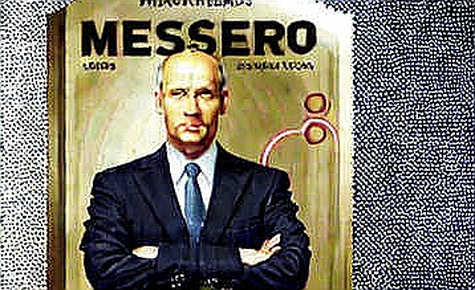
A graffiti-daubed billboard near the Iranian border flashes a warning: "Reconstruction funds will be withdrawn." Within hours, a prediction market—somewhere on a Polygon sidechain—prices the probability of a 2026 US-Iran deal collapse at 26.5%. The number is precise, cold, and deeply misleading.
We audit the code, but who audits the conscience?
I have spent years watching these oracles flicker between truth and theatre. As a junior analyst during DeFi Summer, I reverse-engineered Harvest Finance’s yield strategies and learned that markets often price noise, not signal. The 26.5% figure is not a verdict—it is a snapshot of a thin order book, a handful of wallets, and a geopolitical event whose real stakes will never fit inside a smart contract.
## Context: The Lego of Uncertainty Prediction markets like Polymarket and Augur are elegant machines. They turn fuzzy human fears into binary options: YES or NO. A user deposits USDC, selects a side, and waits for an oracle—usually a multisig of trusted reporters—to declare the outcome. In theory, the price reflects collective wisdom. In practice, it reflects whoever shows up.
The billboard story is a classic trigger. A physical act of defiance (or propaganda) creates a question: "Will the US reallocate Iran reconstruction funds by 2026?" Polymarket’s backend records a probability of 26.5% for YES. The spread is wide, the volume low. A friend on the Polymarket Discord told me he placed $200 on NO because "the stack looks thin." That is not wisdom. That is a single human reading a candle chart and guessing.
## Core: The Architecture of a 26.5% Signal Let us dissect what that percentage actually means. I have audited prediction market contracts—both the governance models of TheDAO rebirth and the yield optimizers of 2020. The technical core is always the same: a resolution mechanism. For this contract, the oracle likely relies on a curated list of news sources and a dispute window. If the U.S. State Department issues a statement, the market resolves. But the resolution is only as honest as the oracle.
Here is the hidden vulnerability: liquidity depth. On Aave or Uniswap, a 26.5% price can be trusted because millions of dollars back it. On a speculative geopolitical market, the entire liquidity pool might be $12,000. A single trader with $5,000 can move the price to 40% or 10% in minutes. The 26.5% is not a consensus—it is the midpoint of a spread that has been nudged by one or two active players. Based on my experience analyzing the Harvest Finance collapse, I know that thin markets are playgrounds for manipulators.
Build not for the peak, but for the plain. The peak here is the spectacle of a probability flashing on a screen. The plain is the unglamorous job of verifying the oracle’s sources. I once spent three weeks chasing an Ethereum developer who had deployed a fake oracle for a DAO governance vote. He had used a single CoinDesk article as authority. When that article was retracted, the vote was invalid. The same thing can happen here if the billboard turns out to be a student prank.
## Contrarian: The False Comfort of Precision Conventional wisdom says prediction markets are truth machines—that they outperform polls and experts. I beg to differ. The 26.5% number gives a false sense of control. It converts a complex, multi-party negotiation into a single probability, ignoring the human friction of diplomacy. More troublingly, it creates an ethical hazard. By betting on the collapse of a deal that funds humanitarian reconstruction, traders are effectively rooting for suffering. The market is amoral, but the participants are not.
The contrarian angle here is not that prediction markets are useless—they have value for price discovery on simple events (election outcomes, weather derivatives). But for geopolitical events with long tails, they become theater. The KYC requirements on Polymarket are a joke: a quick wallet identity check that can be bypassed with a VPN and a burner wallet. The compliance cost is borne by honest users who verify, while speculators slip through. I saw this same dynamic in the NFT artisan roundtables I organized in 2021—the platforms claimed to protect artists, but the real gatekeeping was invisible.
## Takeaway: The Signal in the Noise So what is the real signal? It is not the 26.5%. It is the fact that someone bothered to create this market, and that we—as observers—are drawn to the number as if it were a revelation. The blockchain’s promise of transparency is subverted when the input is garbage. The oracle problem is not just technical; it is philosophical. We can audit the smart contract’s code, but we cannot audit the conscience of the person who submits a false news link.
The takeaway is not a price prediction. It is a call for humility. When you see a prediction market probability on a niche event, ask: Who is betting? How deep is the liquidity? What is the oracle’s conflict of interest? The next time a billboard triggers a market, remember that the real work is not in the smart contract—it is in the human layer beneath.
I will keep writing about these cracks, because they matter more than the headlines. The blockchain was built to liberate information, but without ethical scaffolding, it becomes another amplifier of noise. We audit the code, but who audits the conscience? Only us—the quiet readers who refuse to mistake a decimal point for a truth.